Begin with the right to say no
A scientific interest does not create a right of entry, a right to collect material or a right to someone else’s time. Land managers, communities, researchers and expedition leaders may each have legitimate reasons to restrict an activity. Their responsibilities overlap, and approval from one person may not satisfy another authority’s requirements. Treat permission as specific to a place, activity and occasion.
In Svalbard, consult the Governor of Svalbard for current official guidance relevant to your plans. In Greenland, check applicable requirements with the responsible authorities and local operators rather than transferring rules from a different jurisdiction. Protected areas, wildlife regulations, cultural heritage protections and operating conditions can change. A general website, including this one, is not a permit or a complete statement of law.
Prepare for the visit you are actually taking
Read the itinerary’s limitations as carefully as its highlights. Ask about physical demands, landing procedures, communications, medical screening and evacuation arrangements. Check that any insurance you choose covers the actual activities and location. Discuss individual health needs with an appropriate clinician. Remoteness changes the consequences of ordinary problems, so generic packing advice is not an adequate safety plan.
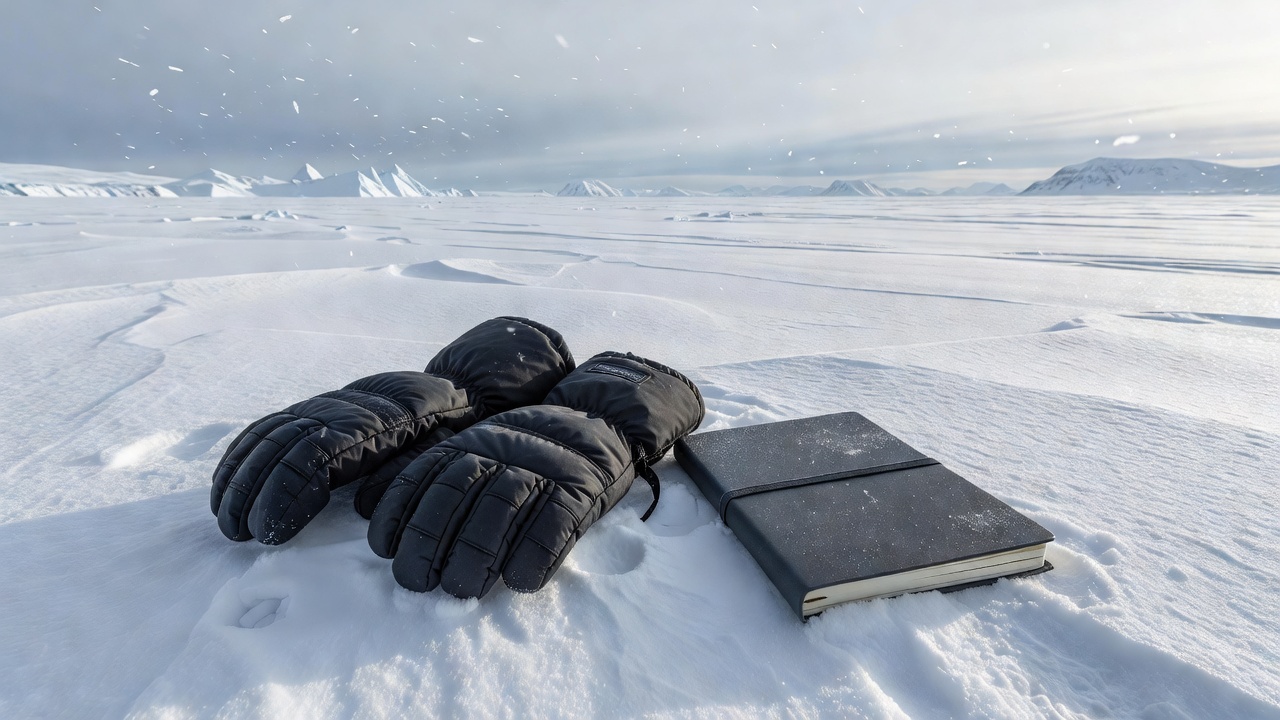
Build a learning kit that does not depend on access to scientific equipment. A notebook, suitable binoculars and a camera you can operate with gloves may be enough. Practise at home, carry power according to operator instructions and protect equipment from moisture. Avoid adding drones, sampling tools or specialist sensors unless their use has been expressly approved and you understand all relevant restrictions.
Keep organisms and material where they belong
Biosecurity begins before departure. Soil, seeds and other biological material can travel on boot treads, hook-and-loop fasteners, bags and outer clothing. Follow your operator’s current inspection and cleaning procedure, including any instructions between landings. Cleaning once at home is not a guarantee that equipment remains clean throughout a journey. Do not improvise chemical treatment where it could damage equipment or the environment.
The Association of Arctic Expedition Cruise Operators, AECO, publishes visitor guidance relevant to expedition cruising, while local authorities set applicable requirements. Their advice is useful preparation, not permission to ignore a guide’s more restrictive instruction. Never move stones, plants, feathers, bones or artefacts as souvenirs. Even apparently abandoned material can have ecological, cultural or scientific significance.
Respect communities as communities
Arctic settlements are homes and workplaces, not extensions of an expedition programme. Ask before photographing people, entering private areas or recording a conversation. A person sharing a story has not necessarily consented to its publication, translation or use in a presentation. Pay attention to the conditions attached to cultural activities and to the decisions communities make about what they do not wish to share.
The Arctic Council includes Indigenous Permanent Participants, reflecting the importance of Indigenous participation in circumpolar affairs. That institutional structure should encourage more careful listening, not the assumption that a single policy document captures every local perspective. Follow community-specific guidance and prefer explanations offered by people authorised to speak about the subject. Do not describe Indigenous knowledge merely as colourful background to scientific work.
Be honest about contribution and impact
A citizen-science activity is worthwhile when its design, permissions and intended use are clear. Ask who manages the observations, what training is needed and how mistakes are handled. If the activity is mainly educational, that can still be valuable; it should simply be described accurately. Handling an instrument once does not create a research qualification, and submitting a record does not guarantee its use.
Travel also has environmental impacts. A lecture programme does not erase emissions from transport or disturbance associated with a visit. Ask operators for specific, transparent information rather than treating “science” or “sustainable” as complete explanations. Consider whether longer preparation, fewer journeys or learning through public resources could meet some of your goals without another trip.
Share what you learned without overstating it
After returning, distinguish your observations from information supplied by guides and published sources. Credit explanations appropriately, avoid revealing sensitive wildlife locations and obtain permission before sharing identifiable people or restricted working areas. Do not invent measurements from photographs or label an unfamiliar object as a scientific sample. The confidence of your language should match the quality of your evidence.
If an observation appears unusual, use an established reporting route rather than announcing a discovery. Provide the information requested and accept that experts may need more evidence. A careful “I do not know” is often more informative than a sweeping conclusion. The strongest outcome of science-inspired travel is not a claim to scientific status, but a more patient, responsible way of attending to the world.
Final departure check
Confirm permissions, current local guidance, operator safety instructions, equipment cleaning, appropriate insurance and a plan for changed conditions. If an activity cannot be done without disturbance or an exception, leave it out.