Research depends on continuity
A remote station supports much more than the visible moment of taking a measurement. Power, communications, safe accommodation, waste management, maintenance and transport make sustained observation possible. A weather sensor needs calibration and a reliable record of interruptions. A biological study may depend on a plot remaining undisturbed for years. Field science is therefore both an intellectual activity and a demanding logistical system.
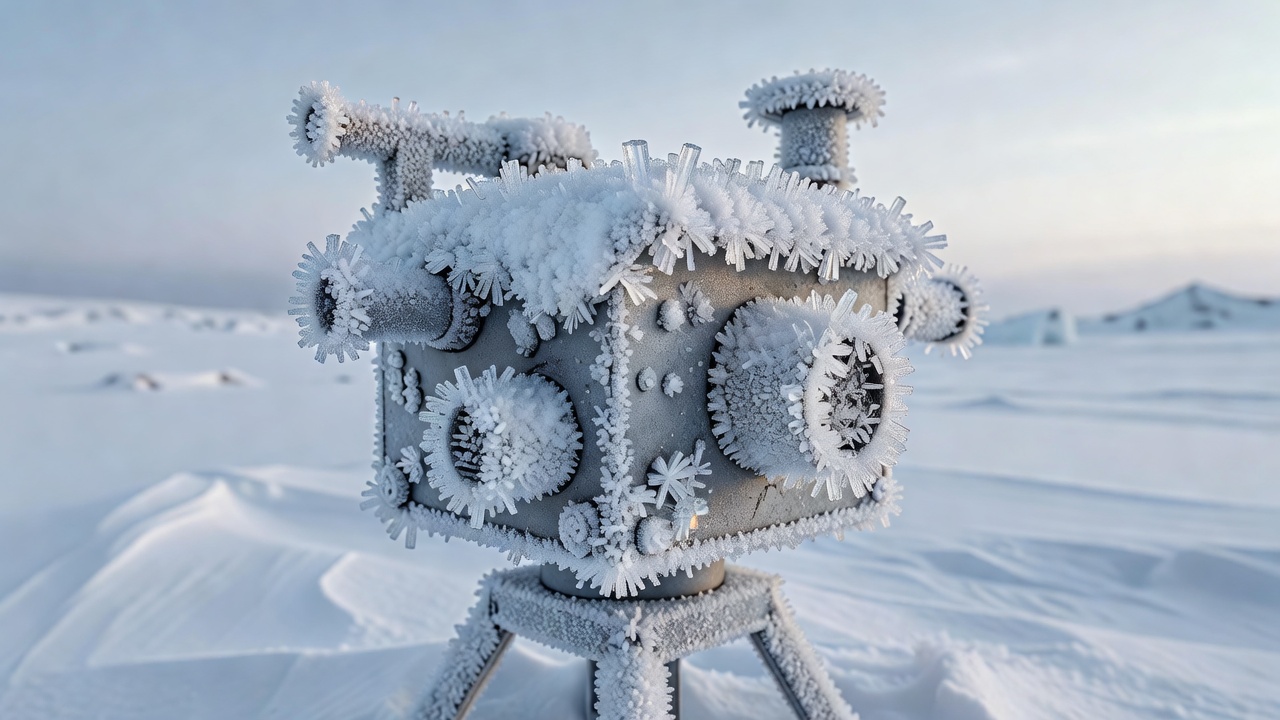
Visitors often notice an unfamiliar instrument and ask what it measures. A second useful question is what could compromise that measurement. Shade from a person, disturbance of snow, an opened enclosure or emissions near an intake may matter in particular settings. You do not need to know the detailed instrument design to understand why boundaries, marked paths and instructions deserve careful attention.
Ny-Ålesund is not a general-access laboratory
Ny-Ålesund, on Spitsbergen in Svalbard, hosts an international research community. Kings Bay provides infrastructure and services, while research organisations conduct their own programmes. The settlement’s scientific role does not make every building, instrument area or route suitable for visitors. Public access arrangements and conduct requirements must be checked through current official information and the responsible operator.
Local restrictions may address sensitive measurements, wildlife, communications equipment and movement around research areas. Read the instructions that actually apply to your visit rather than relying on an old travel account. Do not assume that a mobile device, radio or drone can be used simply because it is ordinary equipment elsewhere. A guided stop, if authorised, remains a limited activity rather than permission to explore independently.
Toolik illustrates another kind of setting
Toolik Field Station, operated by the University of Alaska Fairbanks, supports research in northern Alaska near the Brooks Range. It is known for work on terrestrial and freshwater systems and for the support it provides to visiting research teams. Its location near a road does not turn its laboratories, accommodation or surrounding study sites into a casual visitor attraction.
The scientific value of such a setting often lies in repeated work at known locations. An apparently ordinary patch of tundra may contain a long-term experiment. A marker, cable or small enclosure may have a purpose that is not obvious from a distance. Seek direct guidance before planning any visit and never enter a plot, move a marker or follow a researcher into a working area without explicit authorisation.
Separate education, contribution and research
An educational lecture explains existing knowledge. A demonstration may show a method using equipment set aside for that purpose. A citizen-science activity can collect observations under a defined protocol. Formal research participation involves additional responsibilities that can include training, permits, safety arrangements, ethical review and data-management requirements. These activities are related, but they are not interchangeable labels.
INTERACT, a network associated with northern research stations, helps illustrate the breadth of research infrastructure across the region. It should not be read as a catalogue of tourism entitlements. Similarly, the University Centre in Svalbard, UNIS, is an educational and research institution, not an automatic route into a class or expedition. Participation depends on the institution’s own requirements and arrangements.
Ask for the precise permission
Before paying for an itinerary that mentions science, ask the operator to describe the activity in plain language. Who is delivering it? Where does it take place? Has the relevant host approved the visit? What happens if research needs, weather or transport disrupt the plan? A promise of proximity to a station is not a promise of entry, and a scientist’s presence on a vessel does not mean a laboratory visit is included.
Be especially cautious with claims that a short activity makes participants researchers or guarantees a contribution to published work. Ask whether observations will be used, who checks quality and whether participation can be declined. A responsible organiser should be comfortable explaining limitations. Uncertainty about access should remain visible in your expectations, rather than being quietly converted into a commitment.
Make room for science without entering it
Some of the best preparation happens away from stations. Read public project summaries from the Alfred Wegener Institute or the Norwegian Polar Institute. Look at how a question becomes a method, how a method produces data and how the results are qualified. Public exhibitions, recorded talks and institutional learning materials can provide context without consuming field staff time or affecting experiments.
If a permitted visit does occur, arrive with a small number of thoughtful questions, follow the agreed route and accept that staff may be unavailable. Never photograph screens, documents, identifiable people or sample labels without permission. Leave with a clearer understanding of the work’s constraints, not a claim to access you did not have. Respecting a closed door is sometimes the most scientifically informed action a visitor can take.
Permission checklist
- Written activity description from the organiser.
- Approval from the responsible host where required.
- Current movement, device and photography rules.
- A meaningful alternative if access is cancelled.