Start with connections rather than a checklist
A wildlife list records encounters, but ecology asks how organisms relate to one another and to their surroundings. In parts of the Arctic Ocean, algae associated with sea ice contribute to production that supports marine food webs. Open-water phytoplankton are also important. The balance changes with region, light, nutrients and season; there is no single diagram that explains every fjord or coastline.
When travelling around Svalbard or Greenland, ask what supports the animals you hope to see. Where is food produced? How does it move through the system? Which habitats offer feeding, breeding or shelter? These questions shift attention from the spectacle of an individual animal to the conditions that make its presence possible. They also leave room for the small organisms that rarely appear in tourism brochures.
Seasonal timing is part of the habitat
Light changes strongly across the Arctic year, but light alone does not determine ecological timing. Snow cover, temperature, sea-ice conditions and access to food influence when organisms grow, reproduce or move. Researchers studying phenology—the timing of recurring biological events—look for patterns across repeated observations. One early flower or late bird is not enough to establish a general shift.
A traveller visiting during a brief summer window sees a selective portion of that cycle. Breeding seabirds on the cliffs of the Barents Sea region, for example, depend on conditions beyond the nesting ledge. Their food may be affected by processes far offshore. A lively colony is therefore not proof that the wider ecosystem is secure, just as a quiet day is not evidence that a colony has disappeared.
Tundra is living ground, not spare space
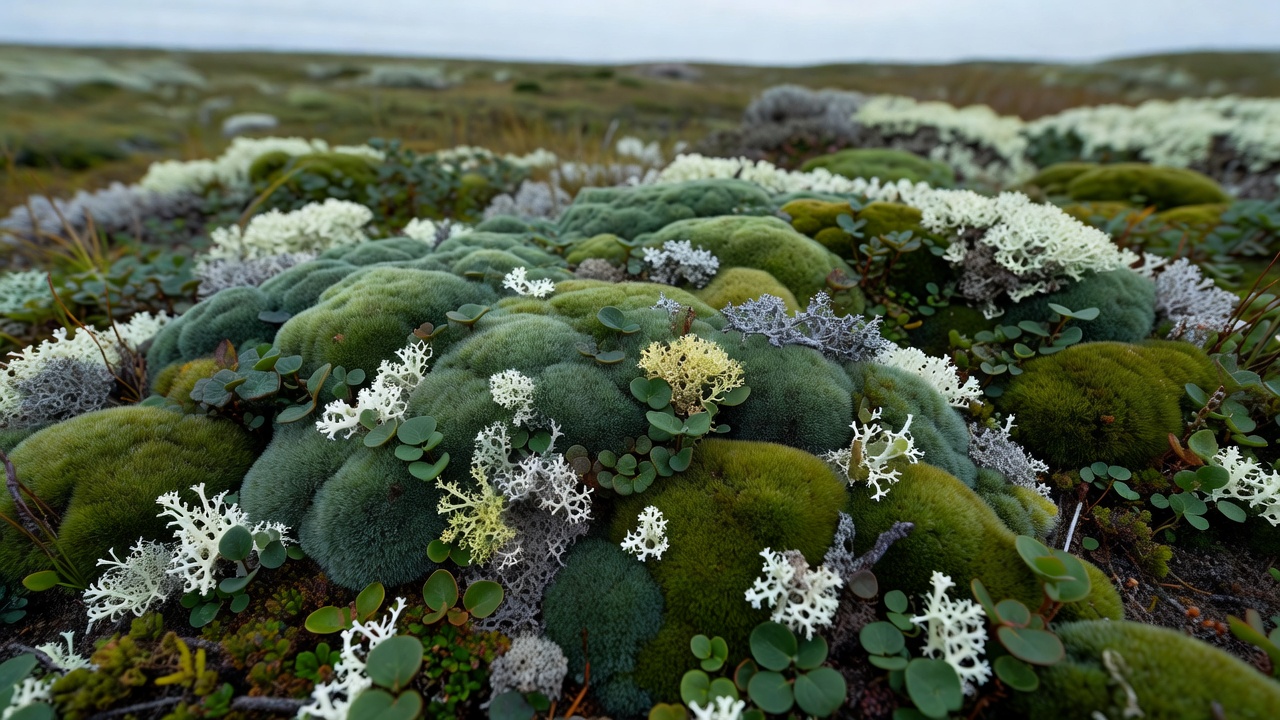
Low plants, mosses and lichens can form intricate communities on ground that looks sparse from standing height. Wet soils and short growing seasons make some surfaces particularly vulnerable to repeated foot traffic. Damage may be difficult to see immediately. A convenient shortcut or a group gathered for photographs can create disturbance even when nobody removes a plant.
Use routes and landing procedures chosen by authorised guides and local managers. Do not assume a bare-looking patch is robust: it may contain biological soil communities or sensitive cultural material. Resist arranging stones, moving bones or collecting feathers for a better image. If you want a closer look, use binoculars or a zoom lens from an approved position rather than stepping into vegetation.
Wildlife behaviour sets a boundary
An animal that looks calm is not necessarily unaffected. Repeated approaches can interrupt feeding, resting or care of young. Behavioural responses differ among species and situations, which is why a single universal viewing distance is not a substitute for current local rules. Follow the stricter applicable instruction and retreat when your guide directs you to do so.
Polar bears require professional risk management, not improvised viewing tactics. Walrus haul-outs and nesting birds also need careful decisions about approach, noise and group positioning. Do not use food, calls, playback or drones to provoke a response. The aim is to leave behaviour as undisturbed as possible, not to obtain a more dramatic photograph or a better species identification at any cost.
Understand who contributes knowledge
The Arctic Council’s Conservation of Arctic Flora and Fauna working group, CAFF, brings attention to biodiversity across the circumpolar region. Its Circumpolar Biodiversity Monitoring Program emphasises coordinated monitoring rather than isolated anecdotes. The International Tundra Experiment, ITEX, is another example of collaboration designed to investigate ecological responses through comparable approaches across locations.
Scientific publications are not the only source of understanding. Indigenous Peoples hold distinct knowledge systems, rights and relationships with Arctic environments. Inuit Circumpolar Council is one organisation through which Inuit voices participate in circumpolar discussions. Do not treat a community conversation as freely extractable research data. Ask before recording, respect restrictions on sharing, and avoid presenting one person as speaking for every community.
Turn an encounter into a careful question
After an observation, note the broad habitat, conditions and behaviour without publishing sensitive nest or den locations. If a recognised reporting programme is available, read its identification, photography and location guidance before contributing. Useful records follow the programme’s method; more uploads do not automatically mean better evidence. Never disturb an animal to complete a form.
At home, compare your questions with CAFF resources, the Norwegian Polar Institute and relevant local management guidance. You may discover that a memorable sighting raises questions about food availability, seasonal movement or observer bias. Keeping those questions open is a strength. Responsible ecological learning replaces the claim “I saw the Arctic” with the more accurate “I observed one part of a much larger living system.”
Observation prompt: presence is not abundance
Seeing one species tells you it was detected at that place and time. Population size requires a suitable sampling design, accounting for where observers looked and how likely detection was.